
The Science Behind Peptides: What Current Research Actually Shows
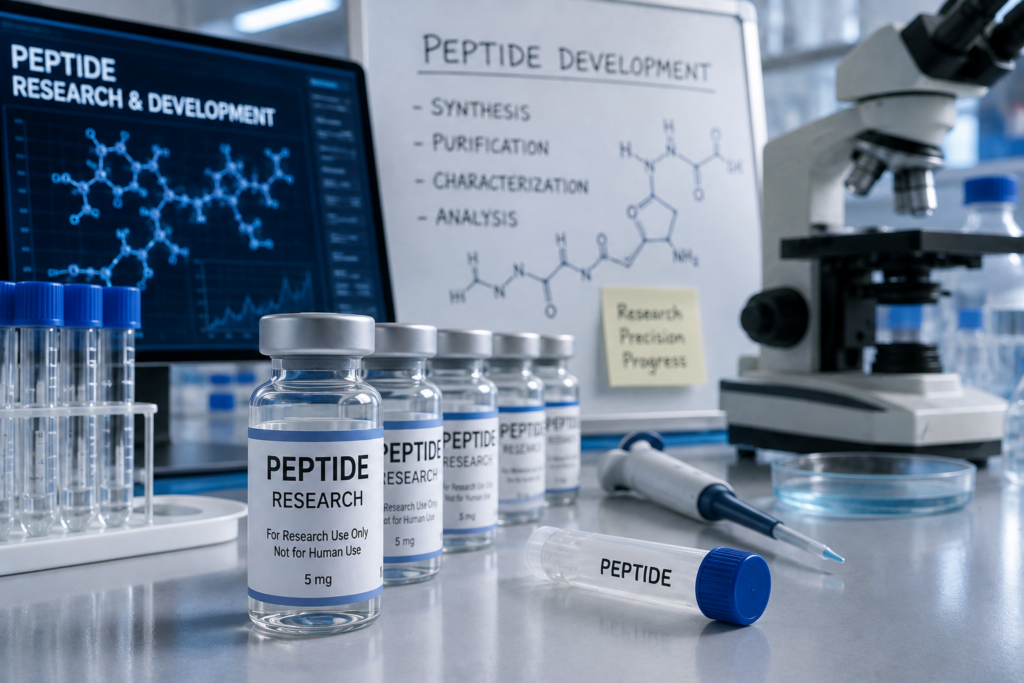
Peptides have emerged as one of the world’s best subjects in the health and wellness industry in recent years due to their ability to promote longevity. This is mainly attributed to the successful commercialization of peptides used in the treatment of diabetes, specifically GLP-1 drugs such as Semaglutide and Tirzepatide. This has seen all peptides under the category attract much attention and even over 50 others are being sold in the market together with them for recovery, longevity, skincare among others. However, “peptide” refers to a class of chemicals which are neither safe nor effective, and hence the science behind each of the peptides is very important.
What Peptides Actually Are, Chemically Speaking
At the molecular level, a peptide is simply a short chain of amino acids — shorter than a full protein, but built from the same building blocks. This is a broad definition. Insulin is a peptide. So is oxytocin. So is glucagon. Your body produces dozens of peptide hormones every day to regulate digestion, mood, growth, and metabolism. Synthetic peptides are designed to either mimic these natural signals or interact with the same receptors in a more targeted or prolonged way.
For instance, semaglutide is a modified peptide that is made to be highly similar to GLP-1, a hormone produced by your body naturally when you eat food. This drug binds to the GLP-1 receptor for much longer than the hormone itself does and thus leads to slower digestion and decreased appetite, something that has been tested in large clinical trials over many years with thousands of patients. Such research in the peptide field is quite rare, and here is why.
The vast majority of other peptides covered by the wellness industry – peptides like BPC-157, TB-500, and numerous others of the GH releasing family – have a completely different set of evidence. The available data about them mostly includes animal and in vitro studies, as well as small human studies in the earlier phases of clinical trials. This does not imply that the effect of these substances is non-existent, but it means that the certainty about it, about the proper dosage and safety is much lower compared to the drug with completed human trials.
Why Evidence Quality Varies So Much Across the Peptide Category
Three factors mostly explain why some peptides have robust data and others don’t: funding, regulatory pathway, and time.
Pharmaceutical companies pour billions of dollars into peptides that have a clear path to FDA approval, because that investment is protected by patents and eventually recouped through an approved drug. This is why GLP-1 medications have such an extensive trial record — large companies had strong financial incentive to prove they worked rigorously and safely, across diverse populations, over multiple years.
Many other peptides don’t have an equivalent commercial path. Some are older, off-patent compounds studied mostly in academic or veterinary contexts. Others are newer research subjects still working through early trial phases. Without a comparable financial engine behind them, they simply haven’t accumulated the same volume or quality of human data, regardless of how promising early findings might look.
Regulatory pathway matters just as much. A peptide moving through the FDA’s full new-drug approval process is required to demonstrate safety and effectiveness through a defined sequence of trials before it ever reaches a patient. A peptide prepared by a compounding pharmacy under an individual prescription follows a different pathway — one built around pharmacy quality and sterility standards rather than large-scale efficacy trials. Both pathways can result in a legitimate, prescribed product, but they answer different questions. One confirms the drug works consistently across a large population; the other confirms the specific preparation is made safely and to the correct specification. Confusing the two is one of the most common mistakes in how peptides get discussed publicly.
Time plays a role too. The regulatory categorization of individual peptides has been unusually active recently, with several substances moving on and off restricted compounding lists as advisory committees review accumulating evidence. A peptide’s official status — and the confidence researchers have in its safety profile — can shift within a matter of months, which means research summaries written even a year ago may already be outdated for a specific compound.
[Image suggestion: A high-resolution photo of a healthcare provider consulting with a patient, or a close-up of clinical research documentation, illustrating the medical review process. Alt text: “Healthcare provider reviewing clinical research and patient information.”]
Reading Peptide Research Critically
For anyone trying to evaluate peptide claims — whether as a patient, a clinician, or simply a curious reader — a few questions consistently separate solid evidence from marketing noise.
First: is the cited research conducted in humans, animals, or cell cultures? A study showing a peptide helped tendon healing in rats is a legitimate starting point for further research, but it is not equivalent evidence to a human clinical trial, and shouldn’t be presented as if it were.
Second: how large and how long was the study? A single small trial with twenty participants over a few weeks tells you far less than a trial with thousands of participants tracked over a year or more. Larger, longer studies catch side effects and inconsistent results that smaller studies simply don’t have the statistical power to detect.
Third: who funded and conducted the research, and has it been independently replicated? Findings that only appear in a single study, particularly one funded by a company selling the compound, deserve more scrutiny than findings replicated across multiple independent research groups.
Fourth: does the peptide have a defined regulatory status, and is that status current? Given how frequently compounding categories have shifted recently, checking a peptide’s present-day standing with the FDA — rather than relying on an older article — is a meaningful part of due diligence.
None of this means every less-studied peptide is worthless or that only FDA-approved drugs deserve consideration. Medicine regularly uses compounded and off-label preparations appropriately, under proper supervision. The point is simply that the strength of evidence behind “semaglutide” and the strength of evidence behind many other peptides currently discussed in the same breath are not remotely comparable, and treating them as interchangeable does a disservice to anyone trying to make an informed choice.
The Practical Takeaway
The research involving peptides is advancing at a rapid pace, and many of the compounds that have not been validated extensively as yet may be able to prove their case in years to come, just as certain peptide hormones became licensed drugs in the past. However, this proof is currently lacking in the majority of cases, and it is necessary to assess every compound separately without depending on the achievements of a select few.
When seeking out peptides as a treatment option, it is recommended that you engage the services of a qualified healthcare practitioner who can evaluate the science of the matter, determine whether the particular substance falls under any regulation, and gauge your body’s reaction to it — instead of basing your decision on the popularity of the “peptides” term. The science is genuine and, in some cases, truly fascinating.
This article is intended for general educational purposes and does not constitute medical advice. Consult a licensed healthcare provider before starting any peptide-based treatment.
