
Swedish vs Deep Tissue Massage: Which One Is Right for You?
Introduction
Massage therapy is a popular way to relax, unwind, and enjoy professional bodywork. However, choosing the right massage style can sometimes be confusing. Two of the most recognized options are Swedish and deep tissue massage. Although both involve hands-on techniques, they differ in pressure, movement, and overall purpose. Understanding Swedish vs deep tissue massage can help you decide which approach better suits your preferences and expectations.
What Is Swedish Massage?
Swedish massage is generally considered a gentle and relaxing form of massage. It uses flowing strokes, kneading movements, and controlled pressure across different areas of the body. The techniques are designed to create a calming experience while working with the body’s soft tissues.
This style is often selected by people who want to relax and enjoy a soothing massage session. The pressure can usually be adjusted according to individual comfort, making Swedish massage a flexible option for people who prefer light to moderate pressure.
Another appealing feature is its smooth and rhythmic movements. Instead of focusing heavily on one specific area, a Swedish session may involve broader areas of the body.
What Is Deep Tissue Massage?
Deep tissue massage uses slower, more focused movements and firmer pressure than a typical Swedish massage. The technique concentrates on deeper layers of muscle and connective tissue.
People may choose this style when they prefer a more targeted approach to areas that feel particularly tense after physical activity or a demanding routine. Because the pressure can be stronger, communication with the massage professional is important throughout the session.
Deep tissue massage does not necessarily mean that the massage should be painful. A qualified professional should work within an appropriate level of pressure and adjust the technique according to the client’s comfort.
What Distinguishes Deep Tissue Massage from Swedish Massage?
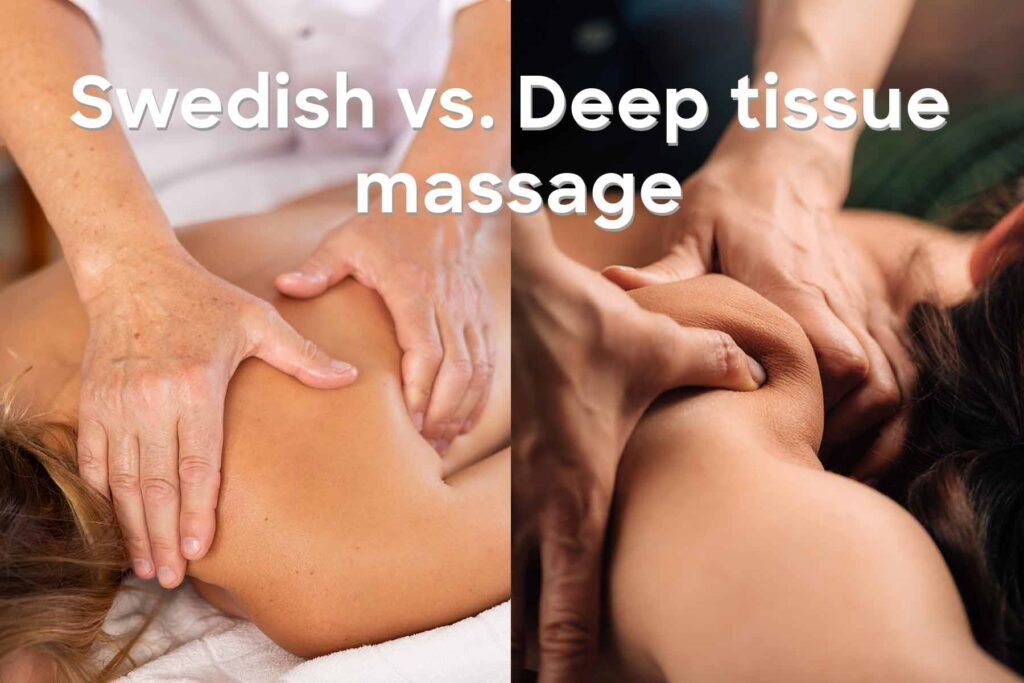
So, what’s the difference between Swedish massage and deep tissue massage? The main difference is the style and intensity of the techniques.
Swedish massage generally uses lighter, flowing movements and is commonly associated with relaxation. Deep tissue massage uses slower and more concentrated pressure to work on deeper areas of muscular tension.
In simple terms, Swedish massage is often chosen for a calming and relaxing experience, while deep tissue massage is generally preferred by people looking for more focused bodywork.
Swedish vs Deep Tissue Massage: Pressure
Pressure is one of the easiest ways to distinguish these two massage styles. Swedish massage typically involves light to moderate pressure, although the intensity can be adjusted.
Deep tissue massage normally involves firmer pressure and slower movements. However, pressure preferences vary from person to person. A massage should remain within a comfortable and appropriate range rather than becoming unnecessarily uncomfortable.
Before starting either type, it is useful to explain your preferred pressure level to the massage therapist.
Swedish vs Deep Tissue Massage: Techniques
The techniques used in each style are also different. Swedish massage commonly includes long gliding strokes, kneading, circular movements, and rhythmic techniques. These movements contribute to its relaxing character.
Deep tissue massage tends to use slower strokes and concentrated pressure. The practitioner may spend more time working on particular areas rather than using the same movements across the entire body.
Because each person’s needs are different, a professional may adjust techniques during a session instead of following exactly the same routine every time.
Which Massage Is Better for Relaxation?
If relaxation is your main goal, Swedish massage may be the more natural choice. Its flowing movements and moderate pressure can create a peaceful experience and make it suitable for people who simply want to take some time away from a busy routine.
Deep tissue massage can also feel relaxing, but its approach is more focused and intense. People who enjoy firmer pressure may prefer it over a lighter massage style.
Which One Should You Choose?
The choice between Swedish and deep tissue massage depends largely on your personal preferences, comfort level, and goals for the session.
Consider Swedish massage if you:
- Prefer gentle or moderate pressure
- Want a relaxing experience
- Enjoy smooth and flowing movements
- Are trying massage for the first time
Consider deep tissue massage if you:
- Prefer firmer, slower pressure
- Want more concentrated bodywork
- Have areas that feel particularly tense after physical activity
- Prefer a more focused massage experience
When unsure, discussing your expectations with a qualified massage professional can help you select an appropriate approach.
Can You Combine Different Massage Techniques?
Massage sessions do not always have to follow one technique from beginning to end. Depending on the professional’s training and your preferences, different techniques may sometimes be incorporated into a session.
For example, a session may begin with gentler movements before focusing more closely on areas where you prefer additional pressure. The important thing is that the approach remains suitable for you and that you communicate clearly about comfort and pressure.
Final Thoughts
Understanding Swedish vs deep tissue massage makes it easier to compare these two popular massage styles. Swedish massage is generally associated with gentle, flowing movements and relaxation, while deep tissue massage uses slower and firmer techniques for more focused bodywork.
The question of which alternative is superior cannot be answered universally. The right choice depends on what you want from your massage, how much pressure you prefer, and how your body responds to different techniques. By understanding the differences and communicating your preferences clearly, you can choose a massage experience that feels comfortable and suitable for your needs.
For more information: visit here

