
Why Roadway Capacity Planning Matters for Growing Cities
- Architecture
-
Aug 24
- Share post
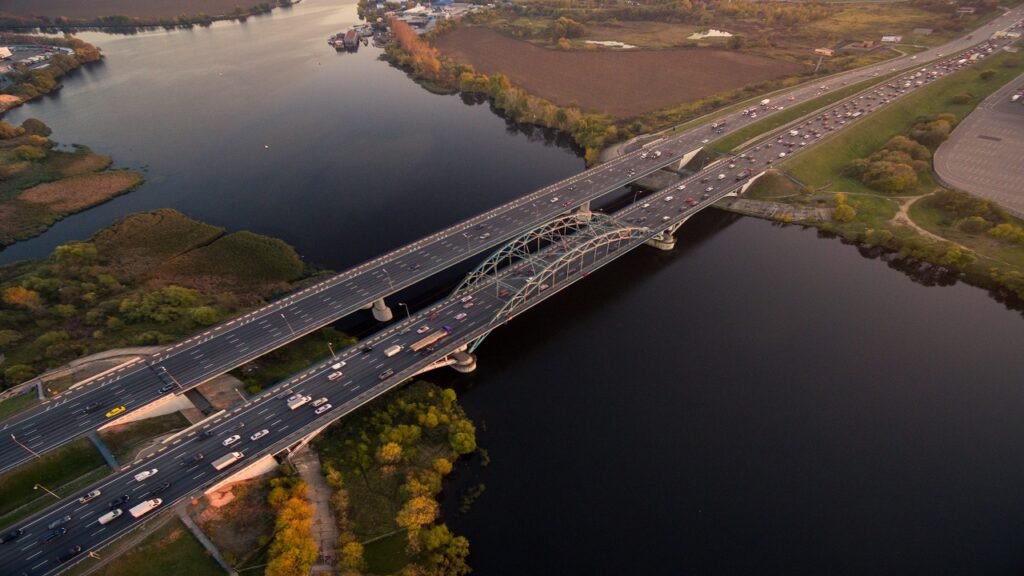
As cities grow, transportation systems must evolve to keep pace with increasing demand. New residents, businesses, housing developments, schools, and public facilities all generate additional trips. When existing roads and intersections cannot accommodate this growth, communities may experience congestion, longer travel times, unreliable commutes, and increased pressure on transportation infrastructure.
This is why roadway capacity planning matters for growing cities. By evaluating current transportation conditions and forecasting future demand, communities can identify where improvements may be needed and determine how transportation investments can support long-term growth. Effective capacity planning is not simply about building wider roads. It is about creating a transportation network that moves people and goods efficiently, safely, and reliably.
Understanding Roadway Capacity Planning
Roadway capacity refers to the amount of traffic a road or intersection can reasonably accommodate under specific conditions. Capacity can be influenced by roadway design, number of lanes, traffic signals, intersection layouts, speed limits, access points, and surrounding land use.
Roadway capacity planning evaluates how transportation infrastructure performs today and how it may perform as a community changes.
Planners and engineers can examine traffic volumes, travel patterns, development forecasts, intersection operations, roadway conditions, and future transportation needs.
The goal is to identify potential capacity constraints before congestion becomes a major problem.
Why Growth Affects Roadway Performance
Population growth typically creates additional transportation demand. More residents mean more trips to work, school, shopping centers, healthcare facilities, recreational destinations, and other locations.
New development can also generate significant traffic. A large residential neighborhood may add hundreds or thousands of daily trips, while commercial or industrial projects may introduce different traffic patterns.
If roadway improvements do not keep pace with development, existing infrastructure can become increasingly congested.
Capacity planning allows communities to anticipate these changes and prepare transportation improvements before problems become severe.
Forecasting Future Traffic Demand
One of the most important aspects of roadway capacity planning is forecasting future travel demand.
Historical traffic data can show how roads are performing today, but communities also need to understand what traffic may look like several years or decades from now.
Planners can use population projections, land-use plans, development proposals, employment trends, and transportation models to estimate future demand.
Different growth scenarios can be tested to understand how changes in development patterns could affect major roads and intersections.
This allows decision-makers to evaluate potential challenges before committing to major infrastructure investments.
Identifying Bottlenecks and Congestion
Traffic congestion is often caused by specific bottlenecks rather than a lack of capacity everywhere.
A single intersection, bridge, interchange, or roadway segment can limit the performance of an otherwise well-connected network.
Roadway capacity analysis can identify these problem areas.
Engineers can examine traffic volumes, turning movements, signal timing, lane configurations, and other factors to determine what is causing congestion.
In some cases, relatively targeted improvements can provide meaningful benefits without requiring an entire roadway to be reconstructed.
Improving Intersection Operations
Intersections are critical points within transportation networks because vehicles, pedestrians, and cyclists converge in the same space.
As traffic volumes increase, intersections can become congested even when nearby roadway segments still have available capacity.
Capacity planning can help identify intersections that may require improvements.
Potential solutions can include additional turn lanes, signal timing adjustments, improved signal coordination, roundabouts, access management, or geometric changes.
The right solution depends on local conditions, but analyzing intersections as part of the broader network can help cities make more effective decisions.
Coordinating Roadways With Land Use
Transportation and land use are closely connected.
Where people live, work, shop, and access services directly influences travel patterns.
If a community approves significant development without considering transportation capacity, existing roads may experience unexpected pressure.
Roadway capacity planning provides an opportunity to coordinate transportation investments with comprehensive planning and land-use decisions.
This can help cities identify areas where transportation infrastructure should be improved before substantial growth occurs.
Supporting Multimodal Transportation
Roadway capacity planning should not focus exclusively on automobiles.
Growing cities also need to accommodate pedestrians, cyclists, public transportation users, freight, and emergency vehicles.
Improving mobility may sometimes involve alternatives to adding vehicle lanes.
For example, a connected pedestrian network can make short trips easier without a car. Reliable transit can reduce vehicle demand along busy corridors. Bicycle infrastructure can provide additional transportation choices.
Considering these modes together can help cities develop more balanced transportation systems.
Improving Transportation Safety
Capacity and safety are closely related, but increasing roadway capacity does not automatically create safer transportation.
Roadway planning can evaluate crash patterns, intersection conflicts, pedestrian crossings, access points, sight distances, and other safety factors.
A roadway improvement project can then address mobility and safety at the same time.
For example, redesigning an intersection may improve traffic flow while also creating safer crossings and clearer vehicle movements.
Integrating safety into capacity planning helps ensure that transportation improvements serve more than one purpose.
Planning for Freight and Economic Growth
Roadways are also essential for moving goods.
Businesses depend on reliable transportation networks to receive materials, distribute products, and serve customers.
As cities grow economically, freight traffic may increase, placing additional pressure on certain corridors.
Roadway capacity planning can identify routes that are important for freight movement and evaluate whether they have sufficient capacity.
Planning for freight can support economic development while reducing conflicts between heavy vehicles and residential or pedestrian-oriented areas.
Making Better Infrastructure Investments
Transportation infrastructure requires substantial investment. Cities must carefully determine which projects should receive funding and when.
Roadway capacity planning helps establish priorities by identifying areas where improvements may provide the greatest benefits.
Projects can be evaluated based on congestion, safety, economic development, population growth, connectivity, cost, environmental considerations, and other factors.
This allows communities to create phased transportation programs rather than reacting to problems as they emerge.
Using Transportation Modeling
Transportation modeling can help planners evaluate how proposed projects may affect traffic patterns.
Models can simulate different growth scenarios and infrastructure improvements.
For example, planners can compare the potential effects of a new roadway connection, intersection improvement, transit investment, or development pattern.
Modeling does not replace professional judgment, but it provides valuable information for comparing alternatives.
By testing potential solutions before construction, cities can reduce uncertainty and make more informed investments.
Preparing for Future Resilience
Growing cities also need transportation networks that can withstand disruptions.
Flooding, severe storms, extreme weather, accidents, and other events can affect roadway operations.
Capacity planning can incorporate resilience by identifying critical routes and potential network vulnerabilities.
Maintaining multiple connections between neighborhoods and important destinations can improve transportation reliability when a major roadway becomes unavailable.
Planning for redundancy can be especially important for emergency response and evacuation.
Creating a Connected Transportation Network
Roadway capacity is not only about individual roads. A transportation network works best when roads and intersections are connected effectively.
Poor connectivity can force traffic onto a small number of major corridors, increasing congestion.
Improving street connections, providing alternative routes, and coordinating roadway improvements can distribute traffic more effectively.
Network-level planning helps cities understand these relationships and avoid focusing too narrowly on individual road segments.
Preparing Cities for Sustainable Growth
Growth is a positive opportunity for cities, but transportation challenges can increase when infrastructure planning does not keep pace.
Roadway capacity planning gives communities a proactive way to prepare. By forecasting demand, identifying bottlenecks, coordinating land use and transportation, improving intersections, supporting multiple transportation modes, and prioritizing investments, cities can create transportation systems that are better prepared for future conditions.
The goal should not simply be to add more lanes whenever congestion appears. Effective planning considers the entire transportation network and asks how infrastructure can move people and goods safely and efficiently while supporting broader community goals.
As cities continue to grow, transportation capacity will remain an important part of long-term infrastructure planning. Communities that evaluate future needs early can make smarter investments, reduce congestion risks, improve mobility, and create transportation networks capable of supporting growth for generations to come.
