
LASIK Surgery in Agra: Procedure, Eligibility, Benefits and Recovery
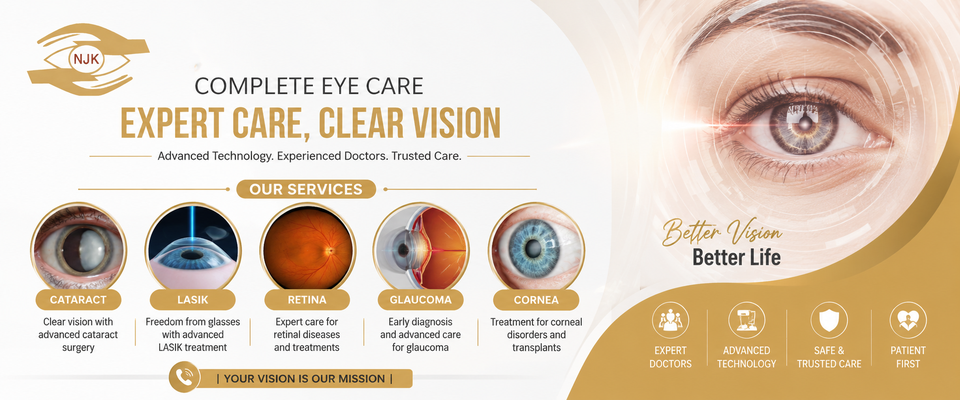
LASIK is a refractive eye surgery used to reduce dependence on spectacles and contact lenses. It uses specialized laser technology to reshape the cornea so that light entering the eye can focus more accurately on the retina. It may be considered for people with refractive errors such as myopia, hyperopia, and certain types of astigmatism.
People searching for LASIK Surgery in Agra can consult an ophthalmologist for a comprehensive eye examination before deciding whether the procedure is suitable. Netra Jyoti Kendra provides eye-care services including refractive surgery consultation, diagnostic evaluation, and treatment guidance.
What Is LASIK Surgery?
LASIK stands for Laser-Assisted In Situ Keratomileusis. During the procedure, the shape of the cornea is precisely modified using laser technology. The aim is to improve the focusing of light within the eye and reduce dependence on corrective eyewear.
LASIK treatment is personalized because corneal shape, thickness, spectacle prescription, and other eye characteristics vary from one person to another. A detailed examination is therefore required before surgery.
Who May Be Suitable for LASIK?
Not every person who wears glasses or contact lenses is automatically suitable for LASIK. An ophthalmologist evaluates several factors before recommending treatment.
The evaluation may include:
- Age and general eye health
- Stability of the spectacle prescription
- Corneal thickness
- Corneal shape and topography
- Degree of refractive error
- Tear-film and dry-eye condition
- Previous eye diseases or surgeries
People with certain corneal conditions, unstable prescriptions, significant dry eye, or other eye problems may require alternative methods of vision correction.
Importance of Pre-LASIK Evaluation
A spectacle prescription alone is not sufficient to determine LASIK suitability. The health and structure of the cornea are also important because the procedure involves reshaping corneal tissue.
During the pre-operative assessment, the ophthalmologist may perform corneal mapping, vision testing, eye pressure measurement, and other investigations as clinically required. These examinations help assess the suitability of the procedure and assist in developing an individualized treatment plan.
At Netra Jyoti Kendra, patients considering LASIK Surgery in Agra can discuss their vision requirements and undergo an appropriate eye assessment before making a treatment decision.
Refractive Errors Treated With LASIK
LASIK is commonly used for different types of refractive errors.
Myopia
Myopia, or short-sightedness, causes distant objects to appear blurred. In suitable candidates, corneal reshaping can modify the focusing power of the eye.
Hyperopia
Hyperopia, also known as long-sightedness, can affect the ability to focus on nearby objects. Selected patients may be evaluated for laser vision correction depending on their eye measurements.
Astigmatism
Astigmatism occurs when the cornea or lens has an irregular curvature. Certain types and degrees of astigmatism may be treated with refractive surgery after appropriate evaluation.
How Is LASIK Performed?
LASIK is generally performed as an outpatient procedure. Anaesthetic eye drops are used before treatment to minimize discomfort.
The cornea is prepared and specialized laser technology is used to reshape it according to the patient’s individual treatment plan. The procedure is usually completed within a relatively short time, and patients generally return home on the same day.
The exact surgical approach and treatment parameters depend on the patient’s eye measurements and clinical requirements.
Recovery After LASIK
Recovery after LASIK differs between individuals. Some patients may notice improvement in vision soon after the procedure, while visual stability can take additional time.
Patients should follow their ophthalmologist’s instructions regarding prescribed eye drops, follow-up appointments, eye protection, and daily activities.
Eye rubbing should be avoided during recovery. The ophthalmologist will advise when activities such as driving, exercise, swimming, and other routines can be resumed.
Possible Side Effects and Risks
LASIK is an established refractive surgery, but like other surgical procedures, it can have potential risks and side effects.
Some patients may experience temporary dry eyes, glare, halos around lights, fluctuating vision, or other visual symptoms. The duration and severity of these effects vary between individuals.
A detailed pre-operative assessment allows the ophthalmologist to discuss the potential benefits, limitations, risks, and alternative options before treatment.
Alternatives to LASIK
LASIK is not suitable for every patient. Depending on age, spectacle power, corneal thickness, corneal shape, and overall eye health, another vision-correction procedure may be considered.
Alternative options can include other laser vision correction procedures or implantable lenses such as ICL in selected patients. An ophthalmologist can recommend an appropriate option after evaluating the eyes.
LASIK Care at Netra Jyoti Kendra
Netra Jyoti Kendra provides comprehensive ophthalmic services, including refractive surgery consultation, cataract care, glaucoma evaluation, corneal treatment, and retina care.
For individuals researching LASIK Surgery in Agra, the centre provides eye assessment and personalized treatment guidance based on individual clinical findings. Patients can discuss their spectacle prescription, lifestyle requirements, eye health, and available vision-correction options with an ophthalmologist.
Making an Informed Decision
LASIK can reduce dependence on glasses or contact lenses for appropriately selected patients, but it is not suitable for everyone and individual outcomes can vary.
A comprehensive eye examination is an important first step before deciding on laser vision correction. Patients should understand the potential benefits, limitations, risks, recovery requirements, and alternatives before proceeding.
If you are researching LASIK Surgery in Agra, Netra Jyoti Kendra can provide comprehensive eye evaluation and guidance to help you understand whether LASIK may be appropriate for your individual vision needs.

