
Stainless Steel Unistrut Systems: Features, Benefits, and Applications
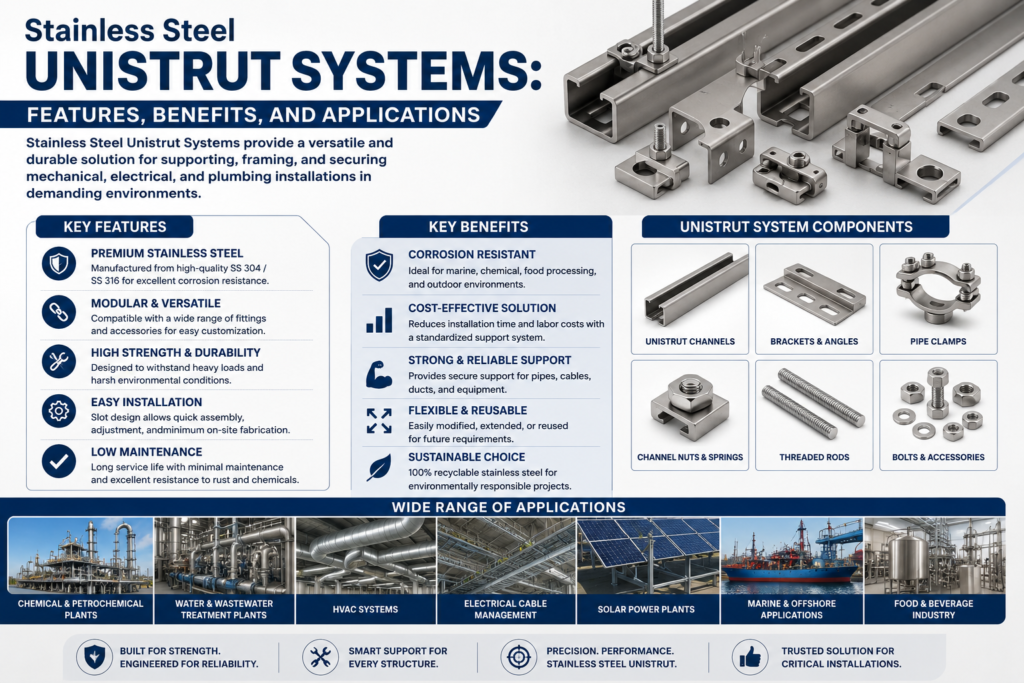
Stainless steel Unistrut systems have become a standard choice for supporting infrastructure in various sectors. These metal framing systems are mainly used in modern construction and large industrial projects because they provide a reliable way to mount and secure equipment. Most engineers and site managers prefer these systems because they are much more versatile than traditional welded steel frames. The ability to resist rust and general wear is the primary reason why they are used in demanding environments. As a professional stainless steel Unistrut supplier, we provide these components to projects where durability is needed. Using these systems allows for a high degree of flexibility during the building process, as adjustments can be made on-site without needing heavy machinery or specialised tools. This makes the overall process of managing utilities and structural supports much more efficient for the workforce involved.
What Are Stainless Steel Unistrut Systems?
A stainless steel Unistrut system is essentially a modular framing setup designed for supporting mechanical, electrical, and plumbing installations. The main part of the system is the channel, a U-shaped steel piece with the edges turned in to form a track. This track lets you slide parts along the channel and place them exactly where you need them. The system also includes important parts like channel nuts, bolts, flat plate fittings, and angle brackets that all work together. You create a solid connection by placing a channel nut into the track and tightening a bolt through a fitting. This holds everything firmly in place by tightening the parts, not by using heat or chemicals. Because the parts are standard sizes, you can mix and match them in many ways to build frames, racks, or simple supports for pipes and cables.
Key Features of Stainless Steel Unistrut Systems
- High strength and durability: The stainless steel can hold a lot of weight, which is helpful for heavy industrial pipes and equipment racks.
- Corrosion resistance: These systems do not rust easily when exposed to moisture, making them suitable for outdoor use or damp indoor areas.
- Modular and flexible design: You can build, take apart, and rebuild the framing in different shapes because the parts are designed to fit together easily.
- Easy installation without welding: The system uses a bolt-together method, so you do not need to hire a welder or get hot-work permits on a job site.
- Reusable and adjustable: If a pipe needs to be moved, you simply loosen the bolts and slide the fittings to a new position rather than cutting and replacing the whole structure.
Benefits of Stainless Steel Unistrut Systems
- Cost-effective installation: You save money because you do not have to pay for expensive welding equipment or the specialist labour that comes with it.
- Reduced labour time: A small team can put these systems together quickly with simple hand tools, helping the project stay on schedule.
- Long service life: Stainless steel lasts for many years without weakening, so you won’t need to replace or repair it often.
- Versatility across applications: One system can hold electrical cables, HVAC ducts, and heavy pipes, so you can use the same parts all over the building.
- Low maintenance requirements: After installation, the system doesn’t need painting, coating, or regular checks for rust or damage.
Applications of Stainless Steel Unistrut Systems
- Electrical installations: These channels help create safe routes for cable trays and heavy electrical conduits in commercial buildings.
- HVAC systems: The framing gives strong support for large air ducts and cooling units on roofs or in mechanical rooms.
- Industrial Facilities: Many factories use these systems to build support frameworks for complex pipe networks and heavy manufacturing machinery.
- Construction Industry: Builders use the channels for secondary structural framing, such as supporting suspended ceilings or internal partition walls.
- Marine and Chemical Environments: The high-grade steel handles the salt air and corrosive chemicals found in docks and processing plants without degrading.
- Solar Energy Projects: Installers use these systems to create the mounting racks that hold solar panels at the correct angle on roofs or in open fields.
- Data Centres: The modular frames support the massive amounts of overhead cabling required to keep servers connected and organised.
Advantages Over Traditional Support Systems
Using a stainless steel Unistrut system offers several practical advantages over traditional welded iron or steel supports. The most obvious difference is the speed of installation. Welding takes a lot of time and requires the site to be cleared of flammable materials, whereas bolting a Unistrut frame together can happen anywhere at any time. There is also much less material waste involved. When you use traditional steel, any mistakes in measurement usually mean the piece is ruined, but with a modular system, you just move the bracket. Safety is another factor to consider. Since there are no sparks or open flames, the risk of fire on the job site is much lower. You also get a much cleaner finish that doesn’t require extra grinding or painting to look professional.
How to Choose the Right Unistrut System
You should start by looking at the specific load requirements of your project. Each channel size and thickness has a weight limit, so you need to make sure the steel can handle the equipment it will support. Environmental conditions are also very important for choosing the right metal. Grade 304 stainless steel is fine for most standard indoor environments, but if you are working near the ocean or in a chemical plant, you should choose grade 316 for better protection. You also need to pick the right size and configuration of the channel, such as deep channels for extra strength or shallow ones for tight spaces. Finally, check that your stainless steel Unistrut supplier has a good reputation for providing consistent quality, as low-grade steel won’t perform the same way under pressure.
Why Choose a Reliable Supplier or Manufacturer
Working with a dependable manufacturer ensures that every component you receive meets international quality standards. If the fittings are even slightly the wrong size or the steel is lower quality than promised, the whole structure can be at risk. A reliable supplier keeps plenty of parts in stock, so you don’t have to wait weeks for a few specific brackets. They should also offer custom services, like cutting channels to the exact lengths you need before shipping, which saves you time on-site. In addition, having access to technical support is highly beneficial when working with a complex layout and needing expert advice on which components are best suited to your particular load.
Conclusion
Stainless steel Unistrut systems provide a practical and long-lasting solution for industrial support needs. Their ability to resist corrosion while remaining easy to install makes them a better choice than traditional welded steel in many situations. By using these modular components, you can reduce labour costs and ensure that your infrastructure is easy to modify in the future. Whether you are working on a small commercial refit or a large industrial plant, these systems offer the durability required for modern engineering. If you are looking for high-quality components for your next project, choose a stainless steel system that can support your infrastructure.

