
The Evolution of Hoodies From Basics to Bold Style Statements
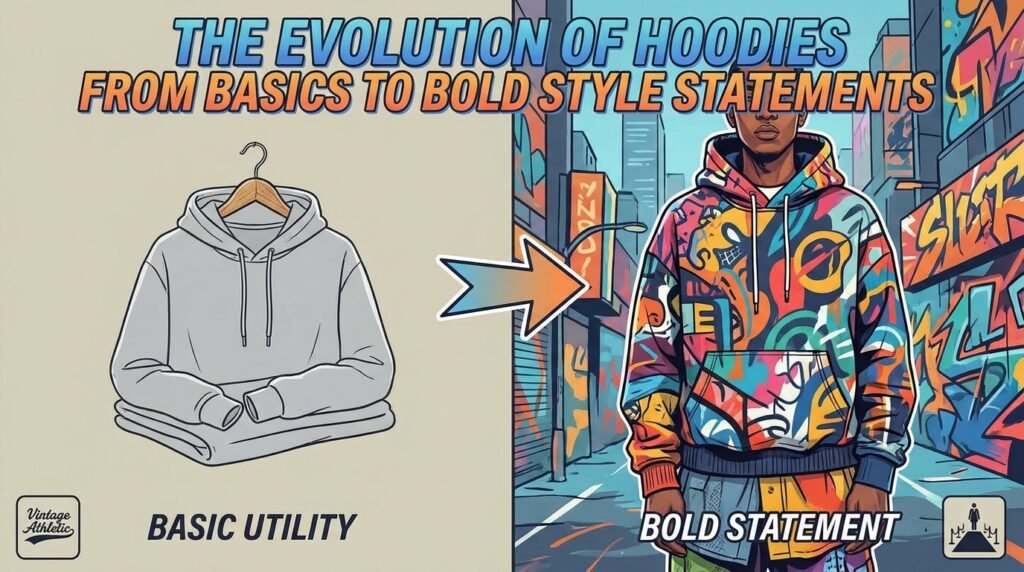
Few garments have managed to move so effortlessly between comfort, culture, and contemporary fashion as the hoodie. What began as a practical piece of clothing designed to provide warmth and protection has become one of the most recognizable symbols of casual style. Today, hoodies appear everywhere from university campuses and city streets to luxury fashion collections, sporting events, music scenes, and creative workplaces.
The appeal is easy to understand. A hoodie combines functionality with an uncomplicated silhouette, giving wearers an adaptable layer that can be dressed up, dressed down, customized, or worn almost entirely for comfort. But its journey from basic athletic clothing to a bold style statement reflects much more than changing fashion preferences. The hoodie has repeatedly absorbed influences from sportswear, workwear, hip-hop, skate culture, outdoor clothing, and designer fashion.
Understanding that evolution helps explain why the hoodie remains relevant across generations. Its design may be simple, but its cultural meaning and styling possibilities have become remarkably sophisticated.
Where the Modern Hoodie Began
The modern hooded sweatshirt emerged from practical clothing traditions rather than the fashion runway. Early hooded garments were valued because the hood offered an additional layer of protection against cold temperatures, wind, and rain. As industrial and athletic clothing developed during the twentieth century, manufacturers began adapting the concept into more comfortable, functional sweatshirts.
The introduction of the hood to sweatshirt construction made the garment particularly useful for workers and athletes. It could provide warmth without the structure of a traditional coat, while the relaxed shape allowed for movement. Over time, this combination of utility and comfort created the foundation for the hoodie as we know it today.
Several features became closely associated with the classic design:
- A soft fleece or cotton-blend construction.
- A spacious hood for additional warmth and coverage.
- A relaxed fit designed for unrestricted movement.
- A front kangaroo pocket for storage and hand warmth.
- Ribbed cuffs and hems to help retain heat.
- Drawstrings that allow the hood to be adjusted for comfort.
These details remain central to hoodie design because they solve practical problems while also contributing to the garment’s instantly recognizable appearance.
From Athletic Essential to Everyday Wardrobe Staple
As sportswear became increasingly integrated into everyday clothing, the hoodie began moving beyond athletic environments. Consumers discovered that the same qualities that made hoodies useful for exercise also made them ideal for commuting, relaxing, traveling, and casual social occasions.
The rise of leisurewear accelerated this transformation. Instead of reserving sweatshirts for workouts or outdoor activities, people began pairing them with jeans, sneakers, joggers, and other everyday staples. The hoodie became an easy solution for transitional weather because it could function as a standalone layer or sit underneath a heavier jacket.
This versatility remains one of the strongest reasons hoodies have retained their popularity. A neutral hoodie can create a minimal outfit, while a graphic or brightly colored version can become the centerpiece of an entire look.
| Hoodie Era | Primary Influence | Typical Styling | Key Characteristics |
|---|---|---|---|
| Early Utility | Workwear and athletics | Practical layering | Durable fabrics, warmth, functional hoods |
| Casual Expansion | Sportswear and leisurewear | Jeans, sneakers, casual trousers | Soft fleece, relaxed fits, everyday comfort |
| Streetwear Era | Music, skateboarding, youth culture | Oversized silhouettes and graphic pieces | Bold prints, logos, statement proportions |
| Contemporary Fashion | Designer and lifestyle fashion | Layered and elevated outfits | Premium fabrics, unusual cuts, refined detailing |
How Streetwear Changed the Hoodie Forever
The hoodie experienced one of its most significant transformations when it became deeply connected with streetwear. During the growth of hip-hop, skateboarding, and youth-oriented urban fashion, the hoodie became more than a comfortable sweatshirt. It became a vehicle for identity.
Graphic prints, oversized proportions, distinctive logos, embroidered artwork, and limited-edition releases gave the garment a new cultural dimension. A hoodie could communicate music preferences, affiliations, artistic interests, humor, political ideas, or loyalty to a particular fashion label.
Streetwear also challenged traditional ideas about fit. Instead of treating oversized clothing as something that looked careless, designers and consumers began using volume deliberately. An oversized hoodie could create a dramatic silhouette when worn with slim trousers, relaxed denim, cargo pants, or shorts.
Color became equally important. Traditional gray, black, navy, and white hoodies continued to dominate everyday wardrobes, but brighter shades began receiving more attention. Pink, green, red, yellow, blue, and washed vintage tones offered consumers new ways to make a familiar garment feel distinctive.
Hoodies Meet Workwear and Utility Fashion
Another important chapter in hoodie evolution is its connection with workwear. Durable clothing brands helped reinforce the idea that casual garments could still possess serious functional qualities. Heavyweight cotton, reinforced construction, practical pockets, and weather-resistant outer layers introduced a tougher visual language into everyday fashion.
That influence can be seen in the way contemporary consumers layer hoodies beneath structured work jackets. A pink carhartt jacket, for example, can add a distinctly workwear-inspired outer layer while the hoodie underneath keeps the outfit relaxed and contemporary. The contrast between a structured jacket and a soft sweatshirt creates visual balance without sacrificing comfort.
This approach reflects a broader movement in modern fashion: clothing no longer needs to belong to one category. Workwear, sportswear, streetwear, and casual fashion can coexist within the same outfit.
The Rise of Color, Graphics, and Personality
For decades, hoodies were often dominated by understated colors. While neutral shades remain popular because they are easy to coordinate, modern consumers increasingly use color to communicate personality.
A colorful hoodie can completely change the energy of an otherwise simple outfit. Soft pastels create a relaxed and contemporary appearance, while saturated colors produce a more confident streetwear aesthetic. Vintage washes can provide a worn-in character, and monochromatic designs can make an outfit feel polished without becoming formal.
Graphics have followed a similar trajectory. Small embroidered logos provide subtle branding, while oversized artwork can transform the hoodie into a statement piece. Typography, illustrations, sports references, abstract graphics, and cultural motifs all contribute to the garment’s visual identity.
For shoppers who enjoy combining workwear with brighter casual pieces, the carhartt jacket pink womens style demonstrates how color can soften the traditionally rugged character of utility-inspired outerwear. Paired with a neutral hoodie, the result can feel both practical and fashion-forward.
Hoodies and the Influence of Global Fashion Culture
Fashion has become increasingly global, and hoodies have absorbed influences from many different cultural movements. Japanese streetwear, Korean fashion, American sportswear, European luxury, and contemporary youth culture have all contributed to the expanding range of hoodie designs.
Seasonal collections frequently use cultural themes to give familiar silhouettes a fresh identity. Limited drops and collaborative collections have also encouraged consumers to view hoodies as collectible fashion rather than disposable basics.
One example of this approach is the growing use of festive and culturally inspired outerwear. An adidas chinese new year jacket demonstrates how established sportswear aesthetics can incorporate seasonal cultural references into a modern wardrobe. Although it is an outerwear piece rather than a traditional hoodie, the design philosophy is closely related: familiar casual clothing becomes more expressive through color, graphics, symbolism, and limited-edition storytelling.
Why Oversized Hoodies Became So Popular
Fit is one of the most visible areas where hoodie design has evolved. The classic sweatshirt traditionally followed a relatively straightforward relaxed shape, but contemporary streetwear has pushed proportions much further.
Oversized hoodies offer several advantages. They provide additional comfort, create a strong silhouette, and work particularly well with layered outfits. They can also make simple styling appear more intentional because the exaggerated proportions immediately attract attention.
However, oversized does not necessarily mean shapeless. Modern designers often manipulate shoulder seams, sleeve lengths, hood dimensions, body width, and hem placement to create specific silhouettes. A well-designed oversized hoodie can therefore look structured even though it feels loose.
How to Style Different Hoodie Fits
- Regular fit: Pair with straight-leg jeans or chinos for an uncomplicated everyday outfit.
- Oversized fit: Combine with slimmer trousers or balanced wide-leg bottoms for contrast.
- Cropped fit: Use high-waisted trousers, skirts, or layered tops to emphasize proportions.
- Heavyweight fit: Wear as a standalone statement layer during cooler weather.
- Zip-up hoodie: Use it as a flexible mid-layer beneath coats, jackets, or overshirts.
Premium Fabrics Are Redefining the Hoodie
The evolution of the hoodie is not limited to appearance. Fabric technology has also expanded its possibilities. Traditional cotton fleece remains popular because of its softness and warmth, but contemporary versions may use organic cotton, recycled fibers, technical blends, brushed interiors, heavyweight jersey, French terry, and performance materials.
Fabric weight has become an important part of the buying decision. Lightweight hoodies work well for layering and transitional weather, while heavyweight versions provide structure and warmth. French terry offers a distinctive balance between breathability and durability, making it useful when a brushed fleece interior would be too warm.
Premium construction can also dramatically change the appearance of a basic hoodie. Clean stitching, carefully shaped hoods, high-quality drawcords, durable zippers, reinforced seams, and well-designed ribbing can turn a simple sweatshirt into a long-term wardrobe investment.
The Hoodie as a Four-Season Layer
One reason the hoodie continues to outperform many trend-driven garments is its adaptability across seasons. During spring, a lightweight hoodie can replace a heavier sweater. In summer, it can serve as an evening layer. During autumn, it works naturally beneath denim, bomber, utility, or leather jackets. In winter, it can become part of a multi-layer system under a substantial coat.
Its layering potential also makes it valuable for travel. A hoodie can provide warmth on airplanes, work as casual evening wear, and transition easily between indoor and outdoor environments. That practical versatility gives the garment an advantage over pieces designed for only one specific occasion.
Building a Modern Hoodie Wardrobe
Consumers do not necessarily need dozens of hoodies to take advantage of the garment’s versatility. A carefully selected collection can cover a wide range of styling needs.
- Start with a neutral foundation. Choose black, gray, navy, cream, or another versatile shade that works with most of your existing wardrobe.
- Add a distinctive color. Introduce one brighter or softer shade to create visual variety.
- Experiment with proportions. Try regular and oversized silhouettes to determine which fits complement your preferred outfits.
- Choose one graphic statement piece. A bold print can become the focal point of otherwise simple styling.
- Consider fabric weight. Select lighter construction for layering and heavyweight fabric when structure and warmth are priorities.
- Use outerwear strategically. Pair hoodies with utility jackets, denim jackets, bombers, or other structured layers to create depth.
The Future of Hoodie Fashion
The hoodie is unlikely to return to being merely a basic sweatshirt. Its continued evolution is being driven by changing consumer expectations around comfort, individuality, sustainability, and functionality.
Future hoodie designs are likely to explore more responsible materials, modular construction, adaptive features, innovative dyeing techniques, and digitally influenced graphics. Personalization may also become increasingly important as consumers look for garments that feel unique rather than mass-produced.
At the same time, the classic hoodie will remain relevant because its fundamental design is already highly efficient. It provides warmth, storage, coverage, mobility, and comfort in a single garment. Fashion can reinterpret those qualities repeatedly without needing to abandon the original concept.
Frequently Asked Questions (FAQs)
Why did hoodies become so popular?
Hoodies became popular because they combine comfort, warmth, mobility, and easy styling. Their association with sportswear, music, streetwear, and youth culture further increased their cultural relevance.
Are hoodies considered streetwear?
Hoodies are strongly associated with streetwear, but they are not limited to that category. They are also widely used in athletic wear, casual fashion, workwear-inspired outfits, travel wardrobes, and contemporary designer collections.
What makes a hoodie high quality?
Fabric quality, stitching, construction, fit, ribbing, hood structure, hardware, and finishing details all contribute to hoodie quality. A durable fabric combined with strong seams and carefully designed proportions generally produces a more dependable garment.
How can I make a hoodie outfit look more fashionable?
Focus on proportions, layering, color coordination, and contrast. Pairing a relaxed hoodie with structured outerwear, distinctive footwear, or carefully selected accessories can make a casual outfit appear considerably more intentional.
Are oversized hoodies still fashionable?
Yes. Oversized silhouettes remain an important part of contemporary casual and streetwear fashion. The key is balance: contrasting a loose hoodie with a more structured or streamlined piece can create a deliberate overall silhouette.
Make the Hoodie Part of Your Signature Style
The hoodie has traveled an extraordinary distance from its practical beginnings. It has moved through athletics, workwear, music, street culture, and mainstream fashion without losing the comfort that made it popular in the first place.
Today, a hoodie can be understated or expressive, minimalist or graphic, fitted or oversized, traditional or experimental. That flexibility is precisely what makes it such a lasting fashion essential.
Rather than treating the hoodie as a basic layer, consider it an opportunity to define your personal style. Experiment with color, texture, proportions, outerwear, and accessories, and you can transform one of fashion’s simplest garments into a distinctive statement that feels entirely your own.
